
Storm Anxiety

Approximately 20% of pets suffer from phobias triggered by storms. The loud noises, bright flashes of light, and changes in atmospheric pressure can be confusing for pets. It can be hard to watch your pet struggle with anxiety, but with the right tools, we can help alleviate the stress caused by storms.
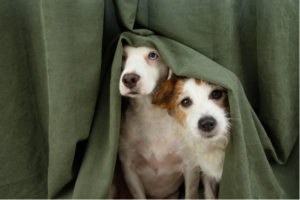
Signs of Anxiety
Noticing the signs of anxiety can help measure how affected your pet is by storms. Signs that you can notice are:
- Lip licking
- Panting and drooling
- Trembling/shaking
- Vocalizing (whining, barking, howling, or yowling)
- Clinginess
- Hiding
- Destructive behavior
- Trying to escape
Tips to Alleviate Storm Anxiety
Thankfully, there are ways that we can help alleviate the stress caused by storms and loud noises:
- Provide a safe space: Set up a separate space for your pet. If you have a room without windows or a quieter room, so they can’t hear as much noise or see lightning flashes. If there are windows in the space, draw the blinds to reduce stimulation further.
- Play calming music: Pets have sensitive hearing, so playing calming music can not only help cover the sounds of storms, but studies have also shown that calming music can help reduce stress in pets. Classical, soft rock, and reggae music have had positive responses from pets. Ensure that you also give your pet a break from auditory stimulation to prevent overstimulation.
- Provide distractions: Distract your dog by providing a frozen Kong, lick mats, or other tasty treats. This can also help associate a positive experience with storms.
- Dressing them in snug garments: Snug garments, such as Thundershirts, help reduce stress by applying constant, gentle pressure around the pet, much like a hug.
- Using pheromones: Adaptil and Feliway use the “comforting messages” of pheromones to help communicate a calming, safe environment for the pet.
- Medications: If your pet becomes extremely stressed during storms to the point where they cannot be distracted, or if using these methods has not been effective, you can discuss anxiety medications with your veterinarian.
- Plan ahead: Be prepared for the upcoming storms by having the calming areas set up. Medications need to be administered a few hours prior to taking effect, so ensure you can give them at an appropriate time or have a friend or neighbor available if needed.

Every pet will be different in what they find comforting, so there may be a lot of trial and error in finding what works best for your pet. If you’re finding it difficult, you can always discuss alternative methods with your vet. Even if medications aren’t an option, they can recommend other calming approaches tailored to your pet’s needs.